Google’s Visual Semantics, AI Reputation Risks, and Gemini’s UK Rollout: What Our Agency Is Acting On Now
This week brings a cluster of developments that directly affect how we build, optimise, and protect our clients’ websites. Google’s ranking systems are reading page design, AI Search engines are resurfacing old negative press, keyword cannibalisation is undermining AI citations, Gemini is now live in Chrome for UK users, and the question of how to justify generative engine optimisation spend finally has a practical answer.
Key Takeaways
- Google’s algorithms assess visual page structure—not just text—when evaluating topical authority.
- AI-generated search answers are giving outdated negative content fresh visibility and new reputational weight.
- Keyword cannibalisation doesn’t just split rankings; it now confuses AI citation engines too.
- Gemini is rolling out inside Chrome for UK users, changing how people interact with search results on the browser level.
- Generative engine optimisation (GEO) investment can be justified without perfect attribution by tracking the right proxy metrics.
Page Design Now Feeds Google’s Understanding of Your Expertise
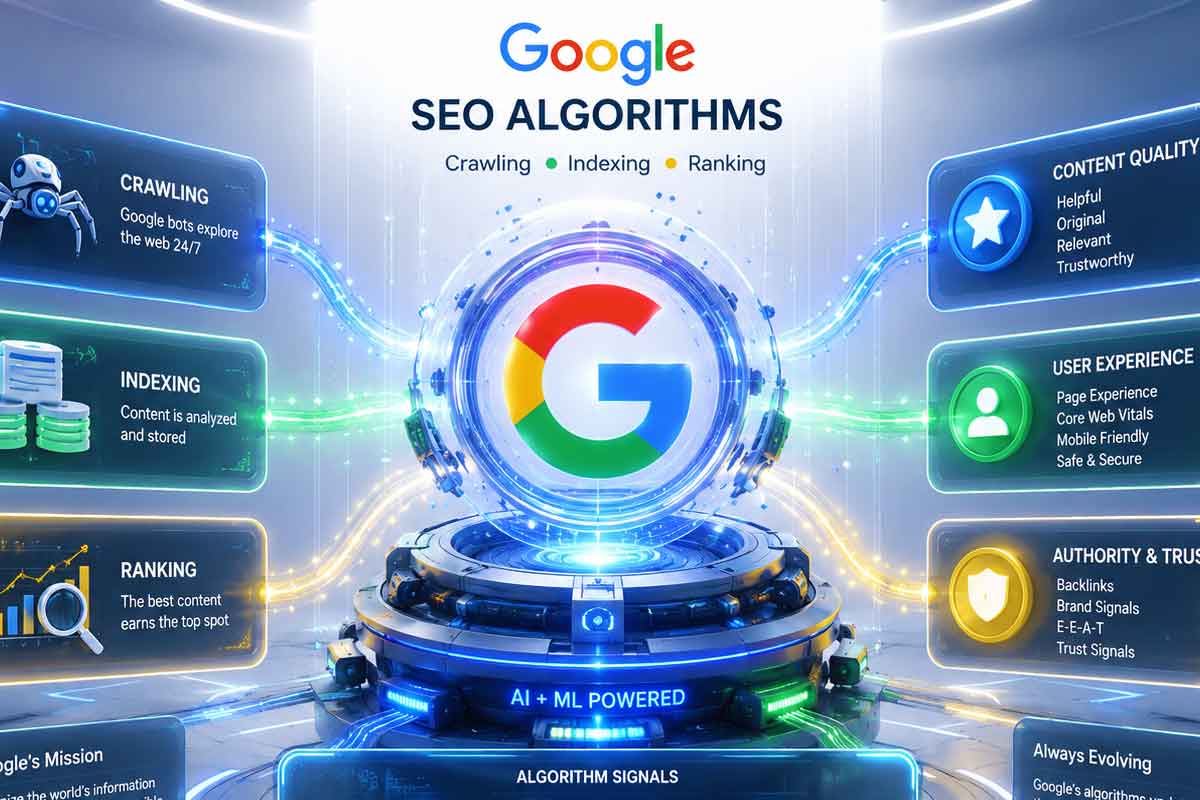
Text alone is no longer the full picture. Patents and case studies now indicate that Google evaluates visual layout, heading hierarchy, image placement, and content grouping when assessing whether a page genuinely demonstrates expertise on a topic. We’ve seen this play out across client audits: pages with strong written content but poor visual structure consistently underperform pages where design and content work together. Our design team now treats semantic HTML structure and visual content grouping as ranking factors, not just UX preferences—a shift backed by recent research into visual semantics and topical authority from Search Engine Land.
Practically, this means we audit heading nesting, whitespace logic, and image-text relationships during every technical SEO review. If your page looks like a wall of text with no visual logic, Google may downgrade its confidence in your authority—regardless of word count.
AI Search Is Resurfacing Negative Content You Thought Was Buried
Old news articles, negative reviews, and outdated complaints are finding new life inside AI-generated answers. large language models don’t distinguish between a 2019 complaint and a 2025 review; they treat indexed content as equally valid citation material. For brands we manage, this creates an urgent need to monitor AI overviews and generative search panels for harmful citations. We’ve already begun building suppression and response workflows informed by Search Engine Land’s analysis of how AI search gives old negative content new life.
The fix isn’t just reactive. We’re proactively publishing fresh, authoritative content designed to outcompete legacy negatives in AI training and citation pipelines.
Keyword Cannibalisation Is Now an AI Citation Problem Too
When multiple pages on the same site target the same keyword, Google has always struggled to pick a winner. Now the stakes are higher. AI engines pulling citations from your domain face the same confusion, which can result in zero citations rather than a split. We’ve integrated cannibalisation detection into our quarterly content audits, using the diagnostic framework outlined in Semrush’s comprehensive keyword cannibalisation guide.
- Detection: We map every target keyword to a single URL and flag overlaps.
- Resolution: Consolidate, redirect, or re-angle competing pages.
- Prevention: Enforce keyword-to-URL mapping before any new content is published.
Gemini Arrives in Chrome for UK Users
Google has started rolling out Gemini inside Chrome for users in the UK. This embeds AI assistance directly into the browser, meaning users can summarise pages, ask follow-up questions, and interact with content without ever reaching a traditional search results page. For our clients, this accelerates the need for content that is structured for extraction—clear answers, defined entities, and schema markup that AI tools can parse instantly.
Proving GEO Value Without Perfect Attribution
One of the biggest blockers to GEO investment is the attribution gap. We advise clients to stop waiting for a perfect measurement model and start tracking proxy indicators: branded search volume shifts, referral patterns from AI platforms, and share-of-voice in generative results. This pragmatic approach aligns with Search Engine Land’s framework for justifying GEO investment without perfect attribution. Directional data beats paralysis every time.
These five developments share a common thread: search is becoming more visual, more contextual, and more AI-mediated. Agencies and businesses that treat these shifts as isolated trends will fall behind. We’re embedding each of these insights into our active client strategies right now.
Frequently Asked Questions
What is visual semantics in SEO and why does it matter?
Visual semantics refers to how Google interprets the design and layout of a page—heading hierarchy, image placement, content grouping—as signals of topical authority. It matters because strong written content in a poorly structured layout can underperform in rankings.
How does AI search resurface old negative content about a brand?
AI-generated answers pull from indexed content without weighing recency, so outdated complaints or negative articles can appear as authoritative citations. Brands need proactive content strategies and monitoring to suppress these results.
What is keyword cannibalisation and how do you fix it?
Keyword cannibalisation happens when multiple pages on the same site compete for the same search term, confusing both Google and AI citation engines. The fix involves consolidating competing pages, setting up redirects, and enforcing strict keyword-to-URL mapping before publishing new content.
Why does Gemini in Chrome matter for UK businesses?
Gemini lets UK Chrome users interact with page content via AI directly in the browser, reducing reliance on traditional search results. Businesses need content structured for AI extraction—clear answers, entities, and schema—to remain visible in this new layer.
How do web designers justify spending on generative engine optimisation?
Track proxy metrics such as branded search volume changes, AI platform referral traffic, and share-of-voice in generative results. These directional signals demonstrate business impact without requiring a perfect attribution model.