Google Confirms Ranking Recovery Takes Months, Long-Tail Keywords Gain Ground, and Why AI Protocols Won’t Replace Knowledge Architecture
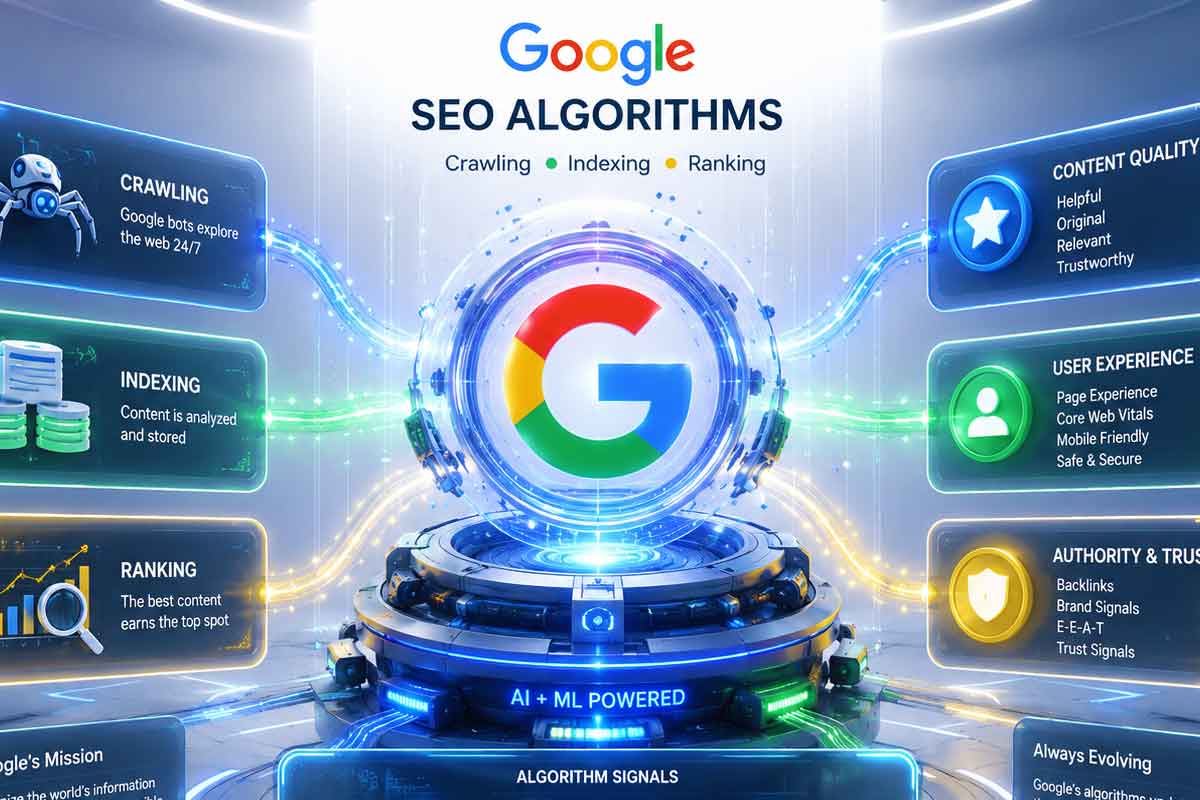
Google has confirmed what our team sees regularly in client audits: fixing SEO problems does not produce instant results. Alongside that reality check, fresh guidance on long-tail keyword strategy, a pointed warning about over-reliance on AI protocols, and two significant Google product launches all landed this week. Here is what matters and what we are doing about it.
Key Takeaways
- Google states explicitly that ranking recovery after technical fixes can take months, not days or weeks.
- Long-tail keywords remain a high-ROI lever for driving quality traffic from both traditional search and AI-powered results.
- Knowledge architecture, not the latest AI protocol, is the foundation of a durable SEO strategy.
- Google’s new Gemini 3.8 Flash models signal a step change in agentic AI and cybersecurity capabilities.
- Google and HHMI Janelia’s fruit fly brain map demonstrates how AI-driven research is accelerating scientific breakthroughs at scale.
Ranking Recovery Is a Long Game — Google Says Plan for Months
Our clients often ask why rankings haven’t bounced back the week after we resolve a crawl issue or clean up thin content. The answer is now on the record. Google has confirmed that ranking recovery takes months after SEO issues are fixed, even when the root cause is fully addressed. Google’s systems need time to re-crawl, re-index, and reassess trust signals.
What this means in practice:
- We set client expectations during onboarding: a technical fix is the starting line, not the finish.
- We layer content improvements and link-building on top of technical remediation to accelerate recovery.
- Monthly reporting tracks leading indicators — crawl stats, indexed page counts, impression trends — so clients see progress before positions move.
Long-Tail Keywords Still Deliver the Best Quality Traffic
Broad head terms are expensive and competitive. Long-tail queries convert better because they capture intent with precision. We build every content calendar around this principle, a practice reinforced by Semrush’s comprehensive guide on choosing long-tail keywords.
The guide highlights a critical point for 2025: long-tail keywords now influence visibility in AI-generated answers, not just traditional blue links. Our team maps long-tail clusters to specific service pages and blog content, ensuring our clients appear in both search engine results and AI overviews. If you are not targeting three-to-five-word queries with clear commercial or informational intent, you are leaving traffic on the table.
Knowledge Architecture Outlasts Every AI Protocol
There is a growing temptation to chase each new AI integration format — structured feeds, agent protocols, markup flavours — as if adopting the format alone will secure visibility. Bill Hunt’s analysis cuts through the noise: the next AI protocol won’t save your SEO strategy if the underlying knowledge architecture is weak.
Publishing a format is not the same as possessing the knowledge. Our approach prioritises deep topical authority, clean entity relationships, and well-structured internal linking before we bolt on any protocol. The protocol is the delivery mechanism; the knowledge is the product.
Gemini 3.8 Flash Signals Google’s Agentic AI Push
Google has launched two new models under the Gemini family. Gemini 3.8 Flash and 3.8 Flash Cyber are purpose-built for agentic workflows and cybersecurity tasks. For our team, this matters because Google’s search infrastructure increasingly relies on these models. Faster, more capable AI behind the scenes means search results — and the AI Overviews layered on top — will become more nuanced. We are already stress-testing client content against AI-summarisation patterns to ensure key messages survive the compression.
AI-Powered Brain Mapping Shows the Scale of Google’s Research Ambitions
In a separate but telling development, Google partnered with HHMI Janelia to map the entire brain and central nervous system of a male fruit fly. The project showcases the computational muscle Google is directing at complex data problems. For SEO professionals, it is a reminder: the company processing your site’s content has the capacity to model systems of staggering complexity. Surface-level optimisation will not cut it.
The direction is clear heading into the second half of 2025. Technical SEO fixes must be paired with patience and layered strategy. Long-tail targeting and deep knowledge architecture are non-negotiable foundations. And as Google’s AI models grow more capable, the bar for content quality will only rise. Our team is building every client strategy around these realities right now.
Frequently Asked Questions
How long does it take for Google rankings to recover after fixing SEO issues?
Google has confirmed recovery can take several months, even after the underlying problem is fully resolved. The delay exists because Google’s systems need time to re-crawl, re-index, and rebuild trust signals for affected pages.
Why are long-tail keywords important for SEO in 2025?
Long-tail keywords capture specific user intent, which leads to higher conversion rates and lower competition. They also influence visibility in AI-generated search answers, making them essential for both traditional and AI-driven discovery.
What is knowledge architecture in SEO and why does it matter?
Knowledge architecture refers to how a website’s content is structured around topics, entities, and their relationships. It matters because AI systems and search engines rely on this structure to understand and surface your content — no protocol or format can substitute for it.
How do web designers prepare client sites for Google’s AI Overviews?
We structure content with clear headings, concise answers to common questions, and strong internal linking so AI models can extract and summarise key information accurately. Testing content against AI-summarisation patterns is now part of our standard quality assurance process.