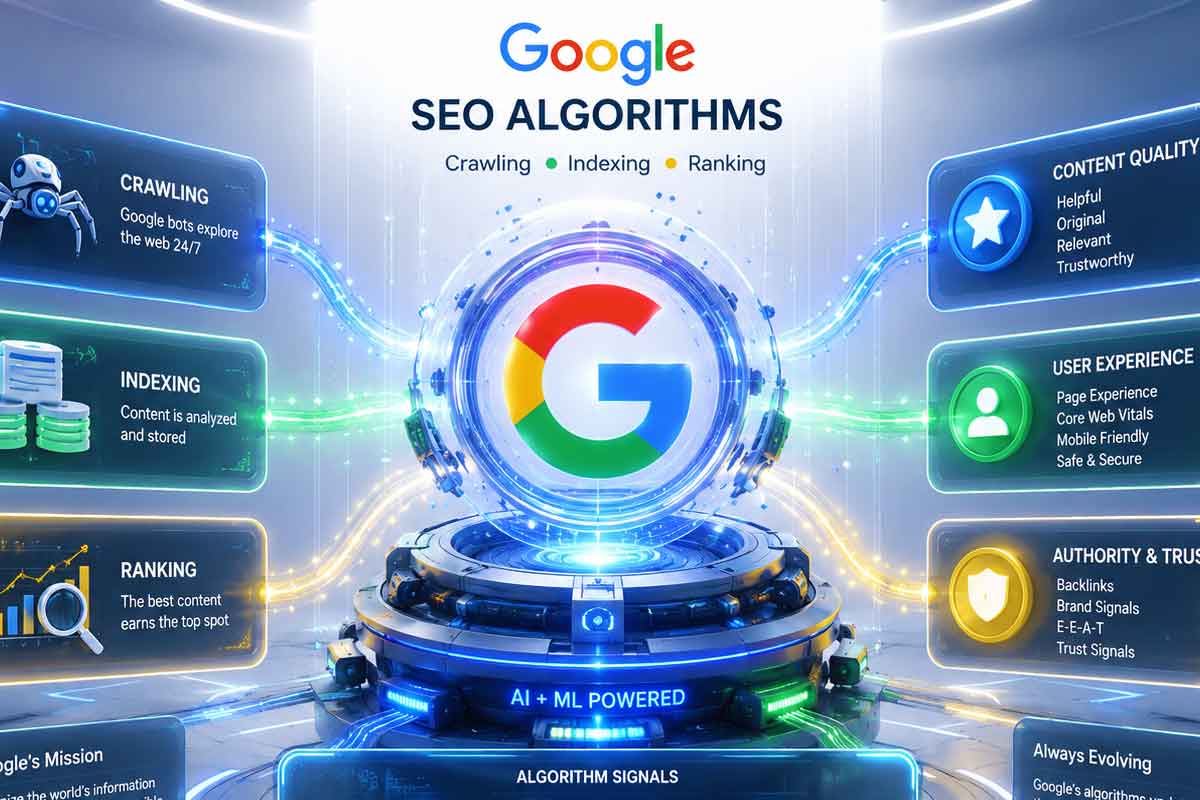
Google’s AI Mode Gets Hotel Booking Standards, LLMs Strip Trust Signals, and MIT Data Maps the SEO Director Path
This week delivered a sharp mix of structural shifts across SEO, AI integration, and career strategy. Google is committing to an open standard for AI Mode hotel bookings, new research highlights how LLMs quietly erode content trust signals, and MIT and Harvard data now chart a concrete promotion path for SEO managers. Here is what our team is acting on right now.
Key Takeaways
- Google will adopt the UCP draft specification for AI Mode hotel bookings, signalling a new structured data standard for travel and hospitality sites.
- LLM-generated answers are stripping out the contextual signals users rely on to judge content quality and recency.
- MIT and Harvard research outlines how SEO and paid media managers can build a credible case for director-level promotion using AI productivity gains.
- Google Arts & Culture has relaunched with visual-first conversational search and AI experiments after 15 years.
- Google Photos rolls out five feature updates, reinforcing Google’s push to embed AI across consumer-facing products.
Google Commits to Open Booking Standard for AI Mode
Google has confirmed it will adopt the Universal Checkout Protocol (UCP) draft specification for hotel bookings within AI Mode over the coming months, as reported by Search Engine Journal. This is a direct signal to every hospitality and travel client we work with: structured data compliance is no longer optional for visibility in AI-driven search.
For our agency, the immediate action is clear. We are auditing hotel and travel client sites against the emerging UCP spec to ensure booking data is machine-readable. Sites that adopt the standard early will have a measurable advantage when AI Mode starts surfacing direct booking options. If you operate in travel, leisure, or hospitality, your technical SEO roadmap needs updating now.
LLMs Are Quietly Eroding Content Trust Signals
large language models present answers without the contextual cues that once helped users assess credibility — publication dates, author expertise, source reputation. This problem is laid out plainly in a recent analysis from Search Engine Journal, which argues that content stacks now fail in both directions: outdated information gets surfaced as current, and fresh insights lose their competitive edge.
What this means for our clients:
- Timestamping and schema markup — We are reinforcing date-based structured data across all editorial content to give LLMs explicit recency signals.
- Author authority signals — E-E-A-T isn’t just a Google ranking factor; it’s becoming the only way to differentiate when AI flattens everything into a single answer box.
- Content refresh cadence — Static evergreen pages are a liability. We are moving clients to quarterly content audits as a baseline.
MIT and Harvard Map the SEO Manager-to-Director Path
New data from MIT and Harvard provides a surprisingly concrete framework for SEO and paid media managers aiming for director-level roles, as covered by Search Engine Journal. The core finding: managers who can quantify AI’s net productivity gains and present a team reskilling plan are far more likely to secure promotion.
We see this playing out in our own team. The SEO professionals who document measurable efficiency improvements from AI tooling — and pair that with upskilling initiatives — are the ones driving client results and career growth simultaneously. It is a useful framework for any agency or in-house team evaluating talent development in 2025.
Google Arts & Culture Relaunches with Conversational AI Search
After 15 years, Google Arts & Culture has been rebuilt with a visual-first conversational search interface, AI-powered experiments, and 27 new city guides, as announced on the Google Blog. This is another data point confirming that conversational, visually rich interfaces are becoming Google’s default interaction model across products.
Google Photos Embeds More AI Across Consumer Features
Five new updates to Google Photos further embed AI into everyday consumer workflows, detailed on the Google Blog. For our team, the broader pattern matters more than any single feature: Google is training billions of users to expect AI-assisted experiences everywhere. That expectation will carry directly into how they interact with search results and commercial websites.
The direction is unmistakable heading into the second half of 2025. Open standards for AI commerce, eroding trust signals in LLM outputs, and AI-driven career benchmarks are all converging. Agencies and in-house teams that treat these as isolated news items will fall behind. We are integrating each of these developments into active client strategies this month.
Frequently Asked Questions
What is the UCP draft specification for AI Mode hotel booking?
The Universal Checkout Protocol is an open standard that structures hotel booking data so AI systems like Google’s AI Mode can read and surface it directly. Google has confirmed it will adopt this spec, making it essential for hospitality sites seeking visibility in AI-driven search results.
How do LLMs affect content trust signals in SEO?
LLMs present information without showing publication dates, author credentials, or source reputation, which strips away the cues users rely on to judge quality. This means SEO teams must reinforce structured data, author schema, and content freshness to maintain credibility in AI-generated answers.
Why does E-E-A-T matter more in an AI search landscape?
When AI flattens multiple sources into a single response, explicit expertise, experience, authoritativeness, and trustworthiness signals are the primary way content gets selected and attributed. Without strong E-E-A-T markers, your content risks being overlooked or misrepresented by language models.
How can SEO managers use AI to build a case for promotion?
MIT and Harvard research shows that managers who quantify AI-driven productivity gains and present team reskilling plans are significantly more likely to reach director level. Documenting measurable efficiency improvements from AI tooling is the most direct route to demonstrating strategic leadership value.